When someone is nearing the end of life, their body undergoes many changes, some of which may occur months before their passing. However, in the final 24 hours, loved ones may witness a common and often unsettling phenomenon—a noise known as the ‘death rattle.’
What is the ‘Death Rattle’?
According to Medical News Today, the ‘death rattle’ is caused by changes in breathing patterns and the buildup of secretions in the throat. Hospice Nurse Julie, an expert in end-of-life care, describes the sound:
“This is just a collection of a small bit of saliva in the back of the throat that just sounds really bad.”
Julie adds that fever is also common during this stage:
“We lose the ability to control the core temperature, so our temperature will fluctuate at the end of life. Again, it’s all very normal and part of the death and dying process if you are dying naturally at home.”
What Does the ‘Death Rattle’ Sound Like?
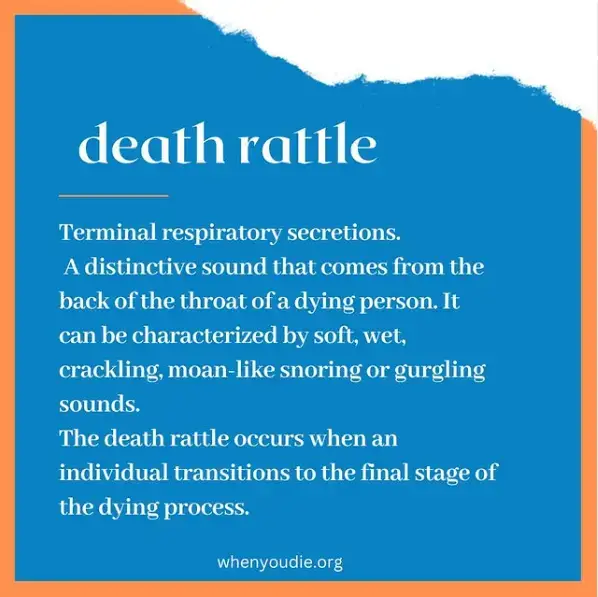
The ‘death rattle’ occurs when a person’s ability to swallow diminishes, allowing secretions to build up in the respiratory tract. The sound is often described as a “crackling, wet noise” that grows louder with each breath.
Some describe it as a faint groaning or snoring sound, while others liken it to a louder gurgling noise. Despite its alarming nature, it’s important to note that the individual is not experiencing pain or discomfort during this process.

Research shows that the average lifespan after the onset of the death rattle is around twenty-five hours. However, the process tends to last longer for those receiving hospice care compared to hospital patients.
What Can You Do to Ease the ‘Death Rattle Noise’?
While the ‘death rattle’ is a natural part of the dying process, there are ways to reduce its intensity to comfort those nearby:
- Turn the person onto their side to allow secretions to drain.
- Raise their head slightly to promote drainage.
- Moisten their mouth with damp swabs to keep it hydrated.
- Use suction to remove secretions when appropriate.
- Limit fluid intake to prevent excessive secretions.
- Administer medications designed to clear secretions, as prescribed by medical professionals.
It’s important to understand that while these measures can help reduce the noise, they likely won’t eliminate it entirely. Medical professionals can provide explanations and support to help loved ones cope with the situation.
The ‘death rattle’ may sound distressing to family and friends, but it’s a natural stage of the dying process. Loved ones should take solace in knowing that the individual is not in pain or distress.
Understanding the phenomenon and its implications can help bring comfort and clarity during this difficult time. By being present and informed, families can focus on providing love and support as their loved one transitions peacefully.